


Your Journey, Our Expertise...
Menu

Annapurna Circuit Trek

13 Days • Moderate • Best season: Autumn/Spring
Annapurna Circuit Trek

Overview

The Annapurna Circuit Trek – 13 Days is an extraordinary Himalayan adventure in Nepal, offering breathtaking mountain views, diverse landscapes, and rich cultural experiences. This trek is perfect for travelers seeking a moderately challenging journey through the Annapurna region, combining natural beauty, traditional villages, and panoramic Himalayan vistas.

The trek begins with a drive from Pokhara to Besisahar, followed by a gradual ascent along riverside trails, terraced fields, and traditional Gurung and Thakali villages. Trekkers pass through picturesque Manang Valley, enjoying alpine meadows, rhododendron forests, and striking mountain scenery. The trail showcases the perfect mix of Nepalese culture and natural wonders, making every step an enriching experience.

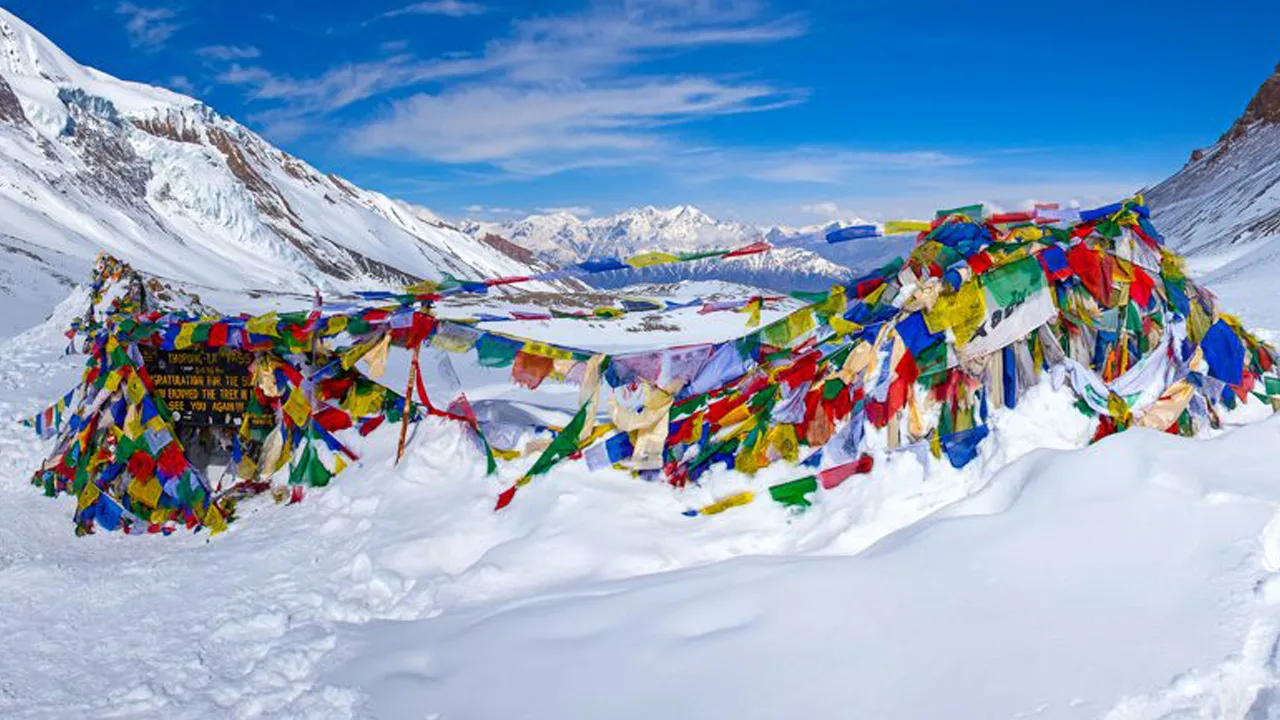
Key highlights of the trek include Thorong La Pass at 5,416 meters, the highest point of the route, offering spectacular views of Dhaulagiri, Annapurna, Machapuchhre (Fishtail), and surrounding peaks. Trekkers also visit Muktinath Temple, a sacred site for both Hindus and Buddhists, adding a spiritual and cultural dimension to the journey. The trail provides ample opportunities for photography, wildlife spotting, and exploring traditional Himalayan lifestyles.

Accommodation along the route is in tea houses and lodges, providing comfortable rooms and warm, home-cooked meals. Experienced trekking guides and optional porters enhance safety, share local knowledge, and help carry luggage, making the trek smoother and more enjoyable. Daily trekking ranges from 5–8 hours, with gradual ascents that allow proper acclimatization, suitable for travelers with moderate fitness and some trekking experience.

Over 13 days, trekkers experience varied landscapes, from subtropical valleys and terraced farmlands to high-altitude deserts, glacial rivers, and alpine terrain. The Annapurna Circuit Trek offers a relatively less-crowded, authentic Himalayan experience, combining adventure, culture, and stunning scenery in one unforgettable journey.

The trek concludes with a return to Besisahar or Pokhara, leaving travelers with lasting memories of majestic Himalayan peaks, serene villages, and the unique beauty of the Annapurna region—making it one of Nepal’s most iconic trekking adventures.

Trip Highlights of Annapurna Circuit Trek

The Annapurna Circuit Trek is one of Nepal's most diverse and rewarding treks, blending dramatic mountain scenery with rich cultural encounters along the way.

  • Cross the dramatic Thorong La Pass (5,416m), one of the highest trekking passes in the world
  • Enjoy stunning views of Annapurna, Dhaulagiri, Manaslu, and Machhapuchhre (Fishtail)
  • Experience diverse landscapes, from lush subtropical forests to arid high-desert terrain
  • Explore charming villages and rich Gurung, Thakali, and Tibetan-influenced cultures
  • Visit the sacred Muktinath Temple, a major pilgrimage site for Hindus and Buddhists
  • Relax in the natural hot springs at Tatopani after days of trekking
  • Enjoy varied teahouse accommodations and authentic local cuisine throughout the journey

How Challenging Is the Annapurna Circuit Trek?

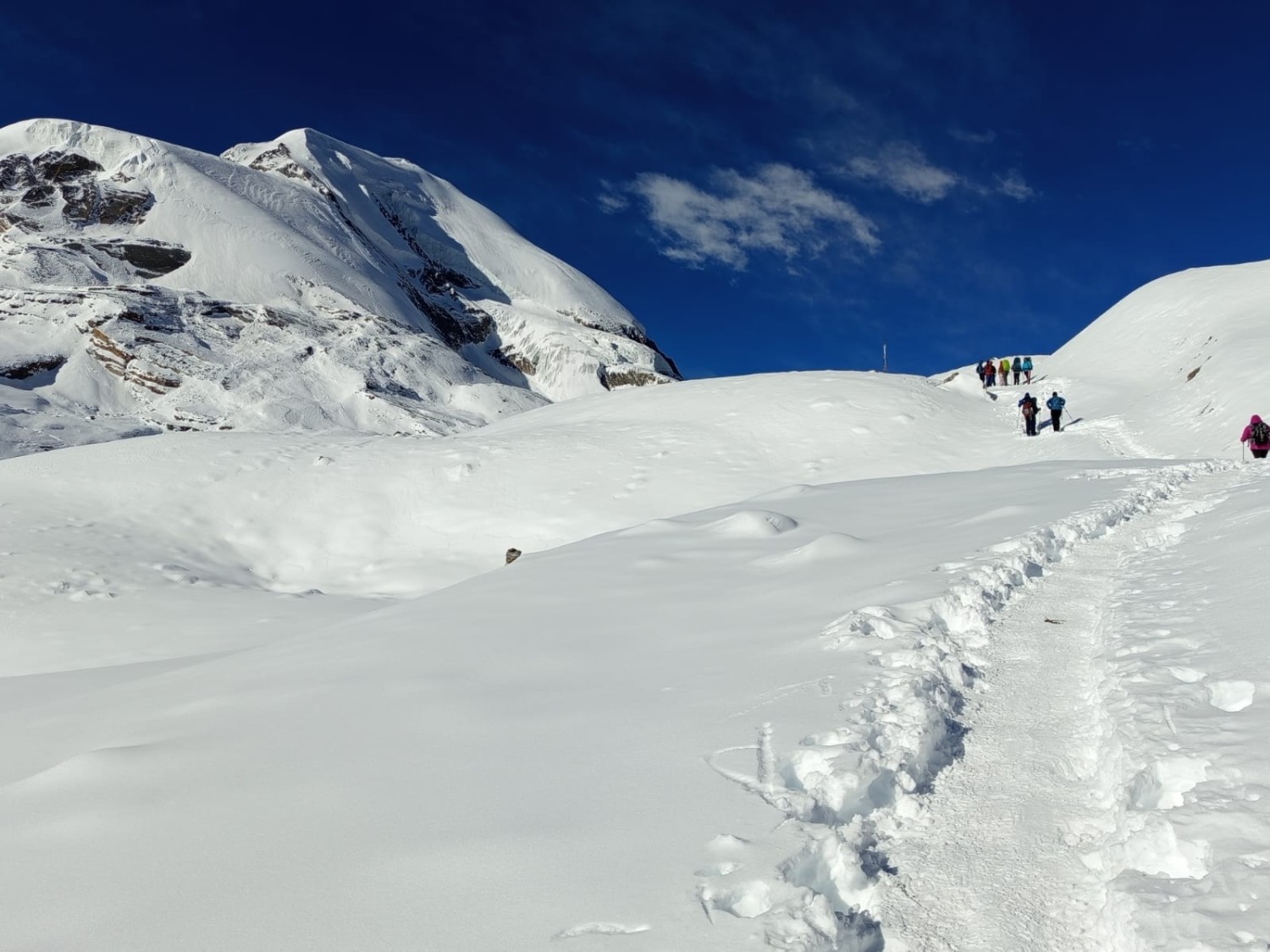
The Annapurna Circuit Trek is considered moderate to challenging, making it accessible to reasonably fit trekkers while still testing endurance on longer days. The toughest stretch is crossing Thorong La Pass (5,416m), which involves an early-morning start, freezing temperatures, and a long, steep descent that can be tiring on the knees. Trekkers spend several days walking 5–7 hours through varied terrain, gaining significant altitude as the trail moves from lush lowlands into the high, arid Mustang region. With a well-paced itinerary that includes proper acclimatization days, most trekkers with decent fitness and no prior high-altitude experience can complete the Annapurna Circuit Trek safely and successfully.

Annapurna Circuit Trek Permits


Permit / Entry Required For Cost for Foreign Trekkers Where to Obtain
Annapurna Conservation Area Permit (ACAP) Entering the Annapurna Conservation Area NPR 3,000 Nepal Tourism Board / authorized offices
TIMS Card Trekker registration and safety tracking NPR 2,000 Authorized trekking agency / designated office
Local Area / Rural Municipality Permit Certain sections depending on the route Varies by municipality Local checkpoint / designated office

Important Note

For the standard Annapurna Circuit Trek, the ACAP permit and TIMS card are the main permits generally required for international trekkers. Local fees may apply depending on the exact route and current local regulations. Permit fees and requirements can change, so trekkers should verify the latest requirements before starting the trek.

Annapurna Circuit Trek Similar Packages

The Annapurna Circuit Trek pairs well with several other trails across the Annapurna region, each offering a slightly different flavor of the same spectacular landscape. For a shorter, more relaxed alternative with equally stunning close-up mountain views, the Mardi Himal Trek is a popular choice, while the Annapurna Base Camp Trek takes you straight into the heart of the Annapurna Sanctuary for a classic, moderately paced journey. Trekkers seeking gentler day hikes with sweeping panoramic views often enjoy the Annapurna Balcony Trek as a scenic warm-up route. For something wilder and more remote, the Nar Phu Valley Trek & Kang La Pass ventures into a restricted, Tibetan-influenced valley rarely visited by outsiders, and the Khopra Danda Trek offers a quieter, off-the-beaten-path escape with incredible Dhaulagiri and Annapurna views. Adventurers craving an even greater high-altitude challenge may also consider the Dhaulagiri Round Trek, a demanding circuit around the world's seventh-highest peak. Together, these routes give trekkers plenty of options to tailor their Annapurna region experience around the Annapurna Circuit Trek.

Why Is the Annapurna Circuit Trek Famous?

1. One of the most diverse treks on Earth — The trail moves through subtropical forests, terraced farmland, alpine meadows, and high-desert terrain, all within a single journey.

2. Crossing the legendary Thorong La Pass (5,416m) — One of the highest trekking passes in the world, offering a true high-altitude milestone for trekkers.

3. Sweeping views of multiple 8,000m+ peaks — Annapurna, Dhaulagiri, Manaslu, and the iconic Machhapuchhre (Fishtail) all appear along the route.

4. Rich cultural diversity — The trek passes through Gurung, Thakali, and Tibetan-influenced villages, each with distinct traditions and architecture.

5. A pioneering trekking route — Opened to foreigners in 1977, it remains one of the original and most celebrated long-distance treks in Nepal.

6. The sacred Muktinath Temple — A major pilgrimage site for both Hindus and Buddhists, adding spiritual depth to the trekking experience.

7. Natural hot springs at Tatopani — A relaxing reward after days of high-altitude walking, unique among Nepal's major trekking routes.

8. Accessible yet adventurous — Rated moderate to challenging, it appeals to a wide range of trekkers without requiring technical climbing experience.

This blend of scenery, culture, and achievable adventure is exactly why the Annapurna Circuit Trek has remained one of Nepal's most iconic treks for decades.

Annapurna Circuit Trek Altitude Sickness: Symptoms & Prevention

The Annapurna Circuit Trek carries a genuine risk of altitude sickness since the route climbs to Thorong La Pass at 5,416 meters, one of the highest points reached on any classic Nepal trekking route. Common early symptoms include headache, nausea, loss of appetite, fatigue, dizziness, and shortness of breath, usually appearing within 24 hours of gaining significant altitude. More serious warning signs — persistent cough, confusion, loss of coordination, or breathlessness at rest — point to HAPE or HACE and demand immediate descent. Prevention comes down to a well-paced itinerary with proper acclimatization days (particularly around Manang), steady hydration, slow and consistent walking, avoiding alcohol at altitude, and trekking with an experienced guide who can spot early symptoms. With sensible preparation, the vast majority of trekkers cross Thorong La safely and complete the Annapurna Circuit Trek without serious altitude-related issues.

People, Culture & Religion on the Annapurna Circuit Trek

The Annapurna Circuit Trek offers one of Nepal's richest cultural journeys, passing through villages shaped by centuries of Hindu, Buddhist, and Tibetan-influenced traditions. In the lower Marshyangdi Valley, trekkers encounter warm Gurung communities, known for their terraced farming, traditional stone houses, and deep-rooted Hindu-Buddhist customs. As the trail climbs higher into Manang and beyond, the culture shifts noticeably toward Tibetan Buddhist influence, visible in the prayer flags, mani walls, chortens, and monasteries that line the path — a reflection of centuries-old trade and migration links with Tibet across the high passes.

The Thakali people, concentrated around the Kali Gandaki Valley near Jomsom and Marpha, are celebrated for their hospitality, distinct cuisine, and role as historic traders along the old salt route between Tibet and India. One of the trek's most significant cultural and spiritual landmarks is Muktinath Temple, a sacred pilgrimage site revered by both Hindus and Buddhists, where devotees believe the eternal flame and 108 water spouts hold purifying power. This blend of ethnic diversity, living traditions, and shared sacred sites makes the Annapurna Circuit Trek as culturally rewarding as it is scenically spectacular.

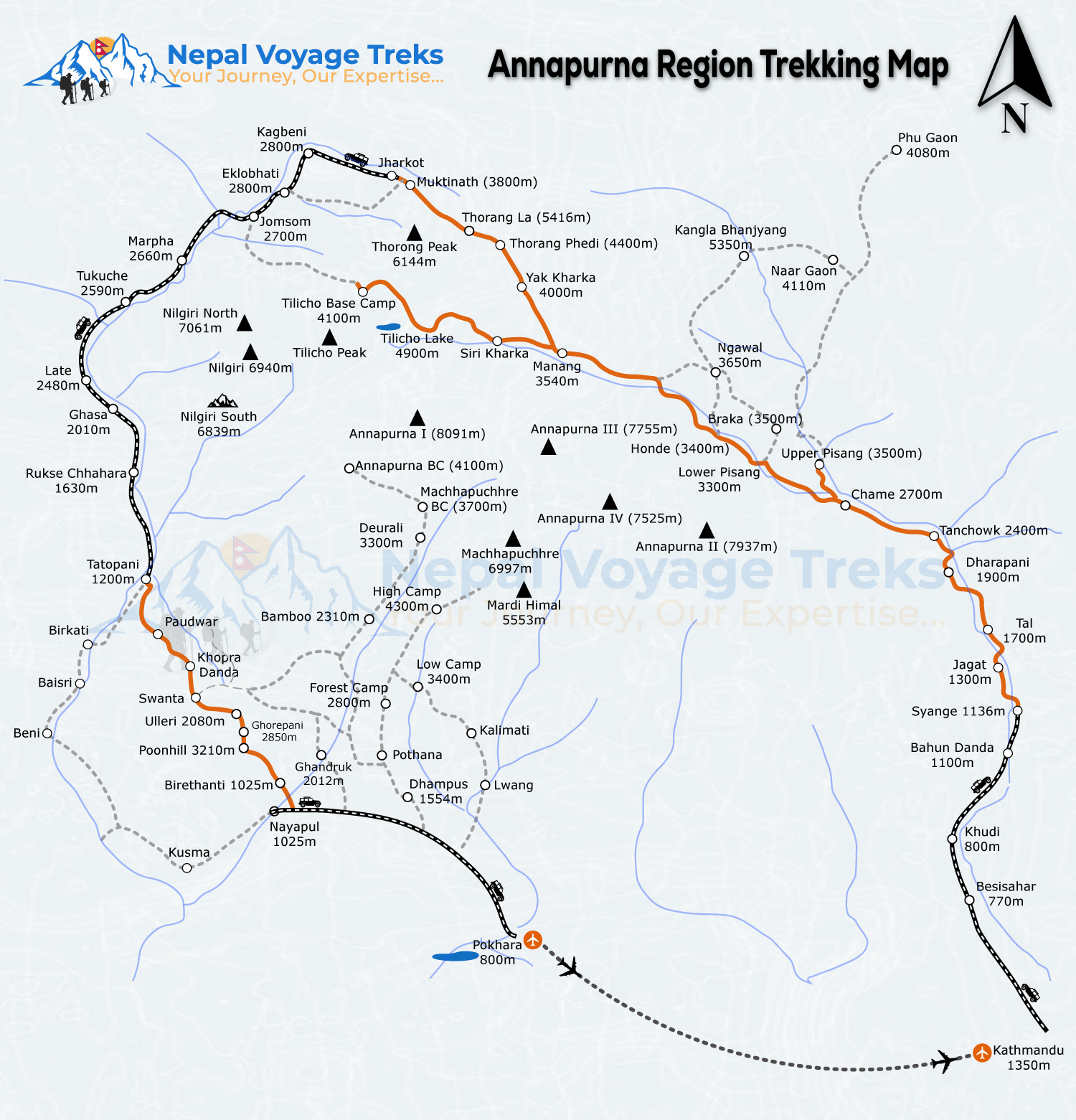
Trip Map
route map

Annapurna Circuit Trek

Trekking & Hiking Adventure

Region Annapurna Region
Duration 13 Days
Grade Moderate
Meal B/L/D
Group Size 1-30
Accomodation Hotel/Lodge
Best Season Autumn/Spring
Start/End Kathmandu
Max Altitude 5416m
Activity Trekking
Day 1 — Arrival in Kathmandu
Elevation 1400 m

Upon arrival at Tribhuvan International Airport in Kathmandu, travelers are warmly welcomed by their guide and driver. After clearing immigration and collecting luggage, you’ll be transferred to your hotel in the city, where you can rest, refresh, and recover from your international flight. Depending on your arrival time, you may have the opportunity to explore the vibrant streets of Thamel, the main tourist hub, or enjoy a traditional Nepali meal at a local restaurant.

Kathmandu, the capital of Nepal, is a fascinating city that blends ancient culture with modern life. You’ll notice the bustling markets, colorful temples, prayer flags fluttering in the wind, and historic architecture as you walk through its streets. This day is primarily for adjusting to the city’s rhythm, resting, and preparing for your upcoming trekking adventure or sightseeing tour. Your guide will also provide a briefing on the trek ahead, including tips on packing, acclimatization, and local customs. Overnight stay is at a comfortable hotel in Kathmandu, offering a convenient base to begin your Nepal journey.

Accomodation: Hotel
Meals: Lunch/Dinner
Day 2 — Drive from Kathmandu to Tal via Besisahar
Ups ↑ 300 m
Down ↓ 000 m
Elevation 1700 m
Distance ⟺ 215 KM

Your day starts early in Kathmandu, where the city slowly wakes up with the sound of temple bells and morning traffic. After breakfast, you hop into a private vehicle arranged for your Annapurna Circuit Trek, ensuring comfort and enough space for your backpacks. The first stretch heads west on the Prithvi Highway, a well-paved road that follows the roaring Trishuli River. You pass through Kathmandu’s outskirts, rice fields, terraced farmlands, and small settlements like Naubise and Malekhu, famous for its fish. This part of the drive is smooth and scenic, giving you a peaceful start before the adventure kicks in.

After 4–5 hours, you reach Besisahar (760 m)  the official starting point for many trekkers beginning the Annapurna Circuit Trek. Here, you stretch your legs, enjoy lunch, refill water, and prepare for the next adventurous section. From Besisahar onward, the journey changes completely. The road becomes a rugged jeep track carved into cliffs and riverbanks, leading through traditional villages like Khudi, Bhulbhule, and Syange. The drive gets bumpy, but the scenery becomes dramatic — deep gorges, waterfalls pouring directly onto the trail, and the emerald-colored Marshyangdi River flowing beside you.

As you continue toward Jagat, the landscape shifts from low-hill forests to rocky cliffs. The air gets crisper and cooler, and the road narrows, sometimes forcing the jeep to slow down to navigate waterfalls splashing across the track. Finally, you enter Tal, a beautiful village sitting on a wide valley carved by the Marshyangdi River. The moment you arrive, you’ll notice a sudden openness  a flat river plain surrounded by steep cliffs.

You’ll check into a cozy teahouse, sip warm tea, and enjoy the peaceful village vibe. Tal is known for its prayer wheels, stone houses, and relaxing sounds of the river, a perfect place to rest before your trekking journey continues deeper into the Annapurna region.

Accomodation: Lodge
Meals: Breakfast/Lunch/Dinner
Duration: 8-10 hours
Day 3 — Trek from Tal to Timang
Ups ↑ 1050 m
Down ↓ 200 m
Elevation 2750 m
Distance ⟺ 14-15 km

Your day begins in the peaceful riverside village of Tal, where the trail follows the Marshyangdi River through a wide valley before narrowing into dramatic cliffside paths. You walk past Karte and along rock-carved sections with waterfalls thundering beside you, eventually reaching Dharapani, one of the busiest entry points of the Annapurna Circuit. After a short break and checkpoint registration, the trail continues through Bagarchhap and Danaque, where the landscape shifts from subtropical to tall pine forests and the first major views of Lamjung Himal appear.

From Danaque, the climb turns steep and challenging as you gain serious elevation through dense forests filled with fir and rhododendrons. This final ascent is the toughest part of the day, but every step brings cooler air and wider mountain scenery. After 1.5–2 hours of uphill trekking, you finally reach Timang, beautifully perched at 2,750 m. The village offers a panoramic viewpoint of Manaslu and surrounding peaks, making the long day’s effort incredibly rewarding.

Accomodation: Lodge
Meals: Breakfast/Lunch/Dinner
Duration: 6-7 hours
Day 4 — Trek from Timang to Dukhure Pokhari
Ups ↑ 400 m
Down ↓ 70 m